
Guests
Anatole
On this page
Their faces
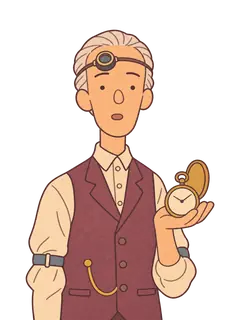
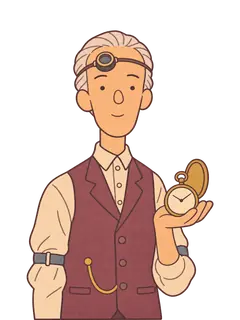
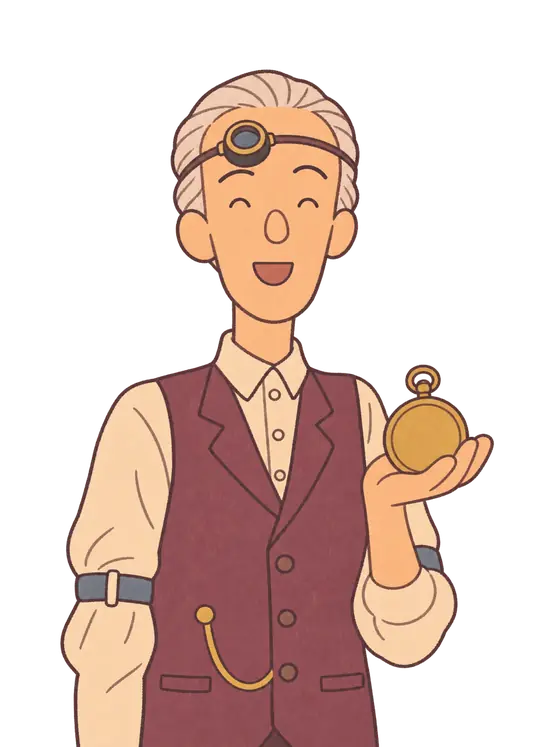
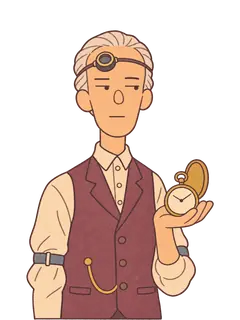
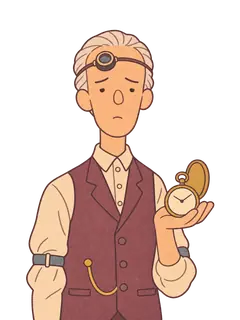
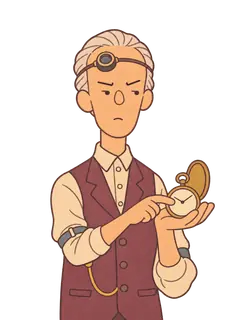


What Anatole says
How they order
Anatole has 18 written orders, heard over the year as the kitchen learns new fillings and techniques; after those, the game makes up more in the same voice. A few of them:
“Honey and almonds, in a triangle, please. Golden.”
In plain words Honey and flaked almonds. A triangle. Golden.


“Lemon and sugar, three corners. Pale, at half past: early and fresh.”
In plain words Lemon and sugar. A triangle. Pale and soft.

“Walnut-case brown under dial white: the hazelnut spread, cream whipped. Square. Pale.”
In plain words Chocolate-hazelnut and whipped cream. A square envelope. Pale and soft.


“Butter, three corners. Golden, which is to say eleven minutes to. I'll watch.”
In plain words Butter. A triangle. Golden.

In Anatole’s words
When Anatole makes an order up, these are the words for a fold and for how it is cooked:
| They mean | They say |
|---|---|
| Triangle | “three corners, hand-sharp” |
| Square envelope | “square as a clock case” |
| Rolled | “rolled like a mainspring” |
| Pale and soft | “pale, at half past” |
| Golden | “golden, eleven minutes to” |
| Crisp | “crisp, on the stroke” |
The usual
Once Anatole has a favourite, the order stops being spelled out: the usual is La Québécoise, golden. It sounds like this: “The usual, at the usual minute.” See the usual.
Not sure what they mean? Ask. See orders.
Anatole’s story: The street clock
“The street clock” unfolds over five visits, told a little at a time across the counter. Somewhere along it comes a question, and your answer changes one thing you will see and one thing the till feels. Both answers are kind; neither is wrong.
“Have you noticed? The clock on the square is five minutes fast. Since 1971. It pains me.”
— how it begins
Spoiler The whole of “The street clock”, its question and its keepsake
- “Have you noticed? The clock on the square is five minutes fast. Since 1971. It pains me.”
- “The town has lent me the key at last. On Sunday I climb up and put it right.”
- “Inside the case, scratched in the brass: 'M., 1971. Fast, so nobody misses breakfast.'”
- “Maëlle set it fast, on purpose, for fifty years. Do I put it right, Madame?”
- “On Sunday I wound the square's clock myself. The whole street looked up. This is for you. (or, after the other answer: “Wound on Sunday, and left five minutes fast. Breakfast time, as she meant. For you.”)”
The question: What should Anatole do?
- Leave it five minutes fast. Anatole: “Fast it stays. A clockmaker letting a clock be wrong. Don't tell my clocks.” (The first guest of the day tips 10% more: early, as Maëlle meant.)
- Set it right. Anatole: “True time, then. I'll leave her a note in the case. She'll be cross, then laugh.” (Guests wait 3% longer: nobody is racing the square's clock any more.)
From the clock on the square: The brass key to the street clock: 'A copy. The town has the other. Don't wind anything.'

The street clock's key A brass copy of the square clock's key, cut by Anatole. It has never wound anything, by order.
In the street’s second year
The story does not stop at the end of the first year: Anatole has a postscript in the second.
Spoiler Anatole’s postscript
- “The town wants an electric clock for the square. I said I'd think about it. For years.”
- “I climbed the clock on Sunday with my oil can. Half the street waved. I waved the can.”
- “The old clock stays. The street signed a card for it. So did I, in my best hand.”
Who Anatole knows


Around the street
You will hear from Anatole at The longest night (December).
Presents
From Yann the pedlar’s cart, Anatole would love a tin of clock oil and a brass key ring.
Friendship
Spoiler What Anatole says as you become friends
As you become friends:
- A regular: “I have set the clock in my window to your opening hour.”
- A friend: “I would let you wind my best clock. I let nobody wind it.”
- A dear friend: “You keep better time than half my clocks, Madame.”
- Family: “When the street wakes at seven, I think: she is open. Good.”
When a present arrives:
- “Clock oil! The good kind. My clocks will purr like cats.”
- “A key ring! My keys will be on speaking terms at last.”