
Guests
Monsieur Fortuné Lagarde
On this page
Their faces
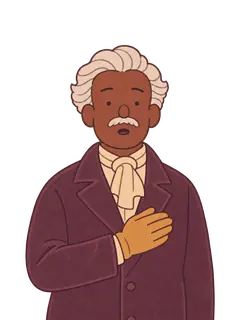
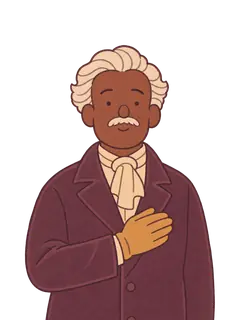
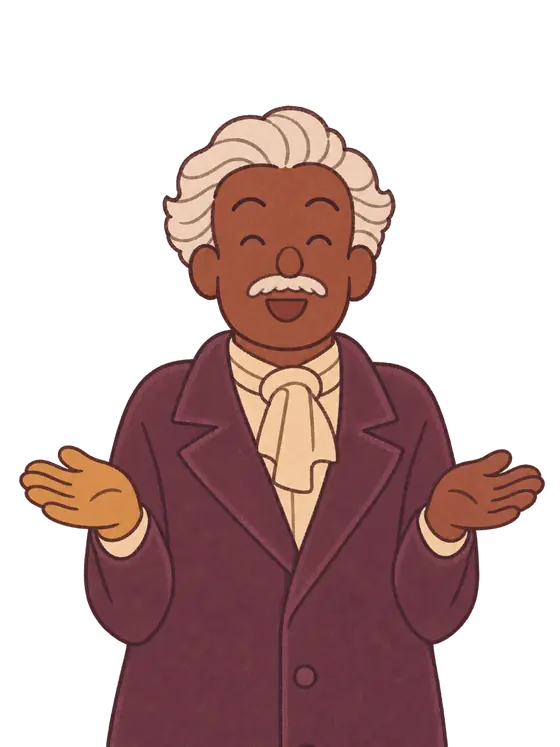
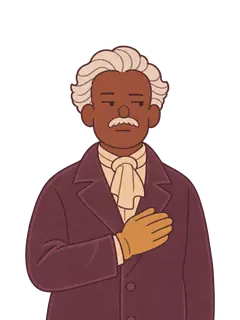
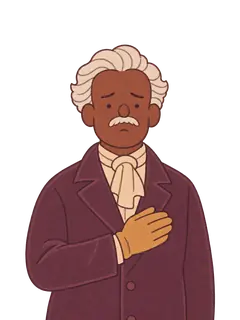
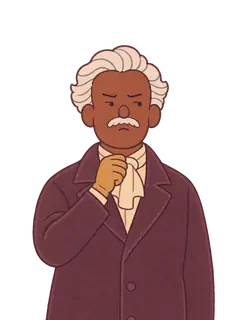


What Monsieur Fortuné Lagarde says
How they order
Monsieur Fortuné Lagarde has 9 written orders, heard over the year as the kitchen learns new fillings and techniques; after those, the game makes up more in the same voice. A few of them:
“A CRÊPE! (softly) Lemon and sugar, for the throat. Folded in three. Pale.”
In plain words Lemon and sugar. A triangle. Pale and soft.

“Honey and lemon-sugar, for the instrument. Rolled like a score. Pale and soft.”
In plain words Honey and lemon-sugar. Rolled. Pale and soft.

“What I ate the night I lost three lines: honey and butter, folded in three. Golden.”
In plain words Honey and butter. A triangle. Golden.

“BRAVO, lemon curd! With whipped cream, square as a stage. Pale.”
In plain words Lemon curd and whipped cream. A square envelope. Pale and soft.


In Monsieur Fortuné Lagarde’s words
When Monsieur Fortuné Lagarde makes an order up, these are the words for a fold and for how it is cooked:
| They mean | They say |
|---|---|
| Triangle | “folded in three, like a programme” |
| Square envelope | “square as a stage” |
| Rolled | “rolled like a score” |
| Pale and soft | “pale and soft, kind to the throat” |
| Golden | “golden as the stage lamps” |
| Crisp | “crisp, like applause” |
The usual
Once Monsieur Fortuné Lagarde has a favourite, the order stops being spelled out: the usual is La Citronnette, pale and soft. It sounds like this: “THE USUAL! (softly) For the throat, please.” See the usual.
Not sure what they mean? Ask. See orders.
Monsieur Fortuné Lagarde’s story: The three lines
“The three lines” unfolds over four visits, told a little at a time across the counter. Somewhere along it comes a question, and your answer changes one thing you will see and one thing the till feels. Both answers are kind; neither is wrong.
“Act two, 1962. I forgot three lines. Someone in the prompt box hummed them. Nobody knew.”
— how it begins
Spoiler The whole of “The three lines”, its question and its keepsake
- “Act two, 1962. I forgot three lines. Someone in the prompt box hummed them. Nobody knew.”
- “At the young prompter's première I learned who it was. Madame Odette. I never thanked her.”
- “Noé found the old prompt book. Her pencil still marks my three lines. How do I thank her?”
- “I have thanked Madame Odette. Sixty years late, and exactly on time. (or, after the other answer: “I sang them. She hummed along, as in 1962. This time I had the words.”)”
The question: How should Fortuné thank Odette?
- Sing her the three lines. Monsieur Fortuné Lagarde: “At last I shall know them! (softly) And she shall hear them sung, not hummed.” (A tenor at closing time: ambience +1 for the week.)
- Give her the old prompt book. Monsieur Fortuné Lagarde: “The book, with her own pencil in it. Yes. She should have it back.” (Odette tips 10% more: she has her old book back.)
From the 1962 season: His programme from the night of the three lines, signed: 'To the lantern, which never forgets.'

The 1962 programme Act two, 1962: the night a tenor lost three lines and a prompter hummed them. Signed.
Who Monsieur Fortuné Lagarde knows


Around the street
Monsieur Fortuné Lagarde also has a word to say in 1 of the street’s little moments.
Presents
From Yann the pedlar’s cart, Monsieur Fortuné Lagarde would love a silk cravat.
Friendship
Spoiler What Monsieur Fortuné Lagarde says as you become friends
As you become friends:
- A regular: “I told Odette your crêpes are kind to the throat. She agreed, quietly.”
- A friend: “I sang a scale in your doorway. (softly) A short one. For you.”
- A dear friend: “At my age one keeps a short list of friends. You are on it, Madame.”
- Family: “When I sing in the street now, Madame, I aim it at your door.”
When a present arrives:
- “A cravat! (softly) The instrument will be so warm.”