
Guests
Lina
On this page
Their faces
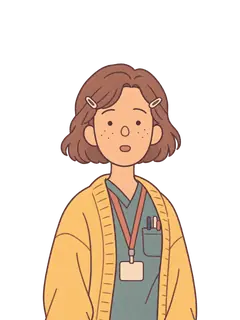
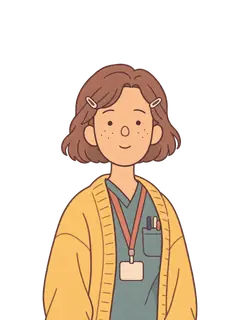
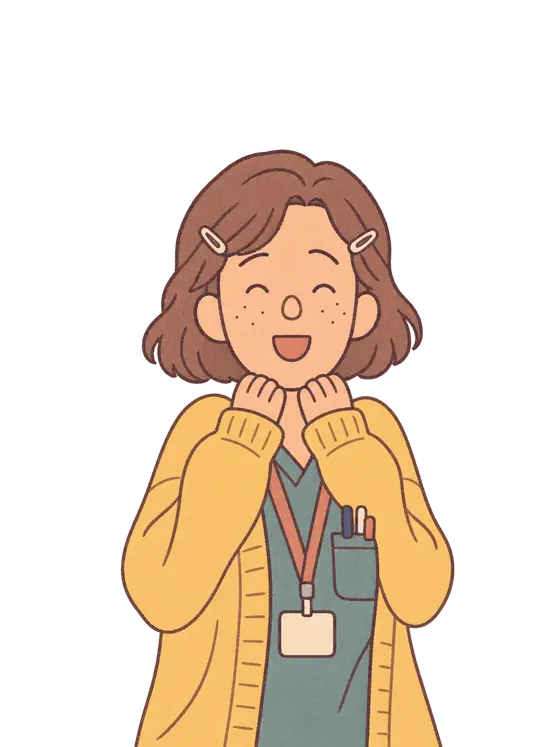
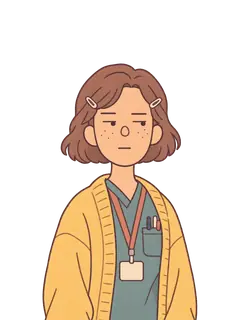
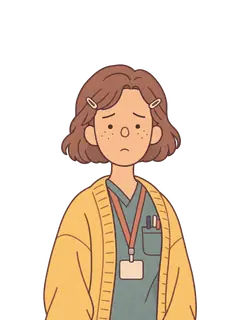
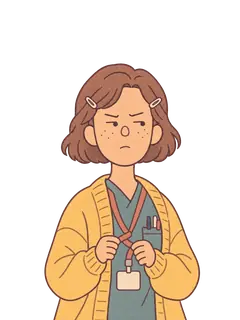


What Lina says
How they order
Lina has 8 written orders, heard over the year as the kitchen learns new fillings and techniques; after those, the game makes up more in the same voice. A few of them:
“Mushrooms and cheese on buckwheat, sealed. Crisp, so it keeps till my break.”
In plain words Mushrooms and Emmental on buckwheat. A square envelope. Crisp.


“Inès says carbohydrates before a night shift. Banana and butter, rolled. Crisp.”
In plain words Banana and butter. Rolled. Crisp.


“Honey, in a triangle, golden, please. Inès had it in her first year. So.”
In plain words Honey. A triangle. Golden.

“A galette with ham, cheese and an egg, sealed. Crisp. Inès says protein. I agree.”
In plain words Ham, Emmental and egg on buckwheat. A square envelope. Crisp.


In Lina’s words
When Lina makes an order up, these are the words for a fold and for how it is cooked:
| They mean | They say |
|---|---|
| Triangle | “folded like a sling” |
| Square envelope | “tucked in like clean sheets” |
| Rolled | “rolled like my sleeves” |
| Pale and soft | “pale and soft, nothing scary” |
| Golden | “golden, the safe one” |
| Crisp | “crisp, for a long night” |
The usual
Once Lina has a favourite, the order stops being spelled out: the usual is La Banane Dorée, crisp. It sounds like this: “The usual, please. Inès's orders. Well, mine.” See the usual.
Not sure what they mean? Ask. See orders.
Lina’s story: First year
“First year” unfolds over four visits, told a little at a time across the counter. Somewhere along it comes a question, and your answer changes one thing you will see and one thing the till feels. Both answers are kind; neither is wrong.
“First night shift on my own tonight. Inès is on days now. She left me a note. Three notes.”
— how it begins
Spoiler The whole of “First year”, its question and its keepsake
- “First night shift on my own tonight. Inès is on days now. She left me a note. Three notes.”
- “It was a long, hard night. Inès said to ask you something. She said you'd know.”
- “She said: ask the crêpière how she keeps going on the bad days. So... how?”
- “I'm staying. On the ward, I mean. Inès pretended not to be pleased. Here: my pen. (or, after the other answer: “I'm staying. Inès says I learn fast on the rough nights. Here, my first pen. It works.”)”
The question: What do you tell Lina?
- The rough days teach you most. Lina: “Rough days teach you. I'm writing that on my hand. In ink this time.” (Night-shift guests wait 5% longer: Lina has passed your advice round the ward.)
- Count the good days instead. Lina: “Count the good ones. Today's one. That's one already!” (Lina tips 10% more: every visit here counts as a good day.)
From the ward: Lina's first-year pen, the one that worked. The cap is chewed. She is not sorry.

Lina's first-year pen A ward pen with a chewed cap: the one that always worked. On its side, in her hand: 'stayed'.
Who Lina knows


Around the street
You will hear from Lina at Exam week (June).
Lina also has a word to say in 1 of the street’s little moments.
Presents
From Yann the pedlar’s cart, Lina would love a pen that actually works.
Friendship
Spoiler What Lina says as you become friends
As you become friends:
- A regular: “I told Inès about you. She said: 'Good. Eat there.'”
- A friend: “You're the first person I tell when a shift goes well.”
- A dear friend: “I've stopped carrying four pens. Now it's two, and one is for you.”
- Family: “When I'm a proper nurse, I'll still come here first. Promise.”
When a present arrives:
- “A pen that works! I'll guard it carefully. With both hands.”