
Guests
Tom
On this page
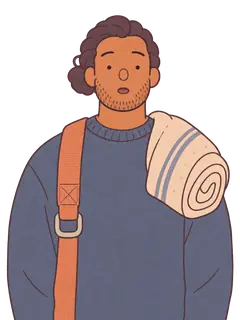
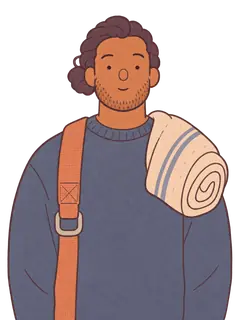
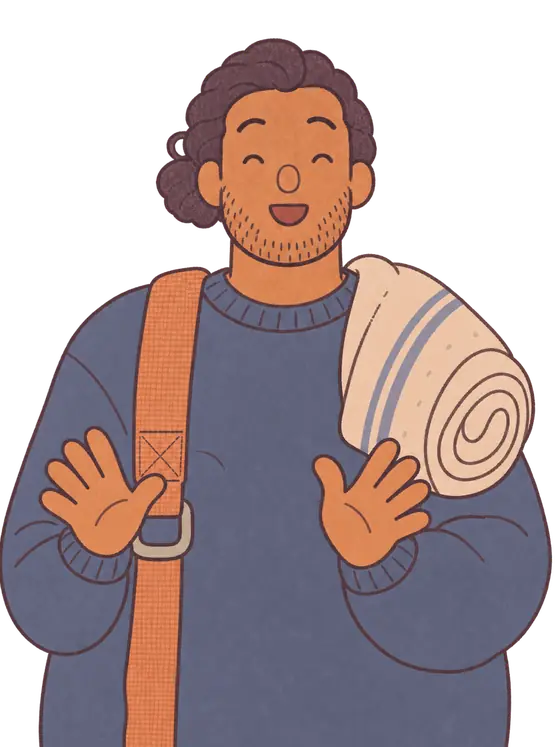
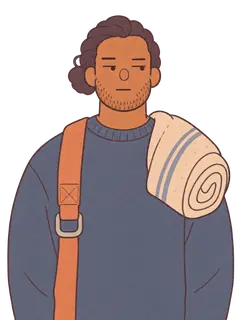
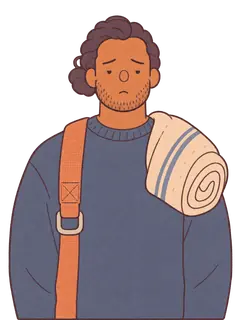
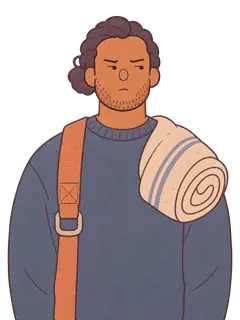
Their faces


What Tom says
How they order
Tom has 8 written orders, heard over the year as the kitchen learns new fillings and techniques; after those, the game makes up more in the same voice. A few of them:
“Last box of the day: raspberry jam and butter, boxed up square. Crisp.”
In plain words Raspberry jam and butter. A square envelope. Crisp.


“One for each of the lads... no, they've eaten. Mine: banana and butter, rolled. Golden.”
In plain words Banana and butter. Rolled. Golden.

“After three floors, a galette: ham, cheese and an egg. Boxed up square. Golden.”
In plain words Ham, Emmental and egg on buckwheat. A square envelope. Golden.


“Chocolate and banana, corner to corner. Golden. On three. One, two... merci.”
In plain words Chocolate-hazelnut and banana. A triangle. Golden.

In Tom’s words
When Tom makes an order up, these are the words for a fold and for how it is cooked:
| They mean | They say |
|---|---|
| Triangle | “folded corner to corner” |
| Square envelope | “boxed up square” |
| Rolled | “rolled like a carpet” |
| Pale and soft | “pale, handle with care” |
| Golden | “golden as an oak dresser” |
| Crisp | “crisp as packing paper” |
The usual
Once Tom has a favourite, the order stops being spelled out: the usual is La Banane Dorée, golden. It sounds like this: “The usual. For me, not the lads. They've eaten.” See the usual.
Not sure what they mean? Ask. See orders.
Tom’s story: The piano
“The piano” unfolds over four visits, told a little at a time across the counter. Somewhere along it comes a question, and your answer changes one thing you will see and one thing the till feels. Both answers are kind; neither is wrong.
“Big job: Monsieur Jacq's piano, attic to ground floor. He wants to play by the window.”
— how it begins
Spoiler The whole of “The piano”, its question and its keepsake
- “Big job: Monsieur Jacq's piano, attic to ground floor. He wants to play by the window.”
- “It won't go down the stairs. We tried it every way. The stairs were very patient.”
- “Out by the big window, or it stays upstairs. He says you decide. Your aunt always did.”
- “Priya came to tune it. She says it was only a little out. Like me after a long lift. (or, after the other answer: “It's on the ground floor now. Priya tuned it. Monsieur Jacq plays with the door open, too.”)”
The question: What should happen to the piano?
- Out through the window, slowly. Tom: “Through the window, on three, wrapped in every blanket we own. The street will clap.” (The crowd that watched the piano stays for crêpes: one more guest a day for three days.)
- Leave it, and open the window. Tom: “Then he plays from the attic, window wide. The street gets a concert. No lift needed.” (Piano from the attic window: ambience +1 in the evenings.)
From the removals van: A brass caster from Monsieur Jacq's piano, polished. 'It's done its last lift,' says Tom.

A brass piano caster One small brass wheel from Monsieur Jacq's piano. It carried a lot of music up a lot of stairs.
Who Tom knows


Around the street
You will hear from Tom at The mended fountain, Lison's pitch on the square and Young plane trees.
Tom also has a word to say in 1 of the street’s little moments.
Presents
From Yann the pedlar’s cart, Tom would love a pair of work gloves.
Friendship
Spoiler What Tom says as you become friends
As you become friends:
- A regular: “If anything needs shifting, call me. No charge. Just crêpes.”
- A friend: “The lads want to meet you. I told them to wait in the van. Politely.”
- A dear friend: “I'd move this whole shop for you, one jar at a time.”
- Family: “Best stop on any round. I'd carry the counter home if I could.”
When a present arrives:
- “Gloves! The old ones had a hole for every lift. Merci.”