
Guests
Amandine
On this page
Their faces
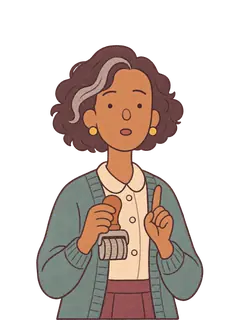
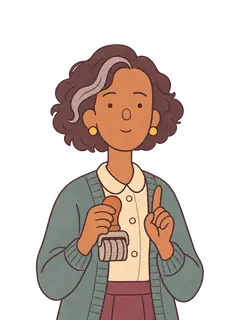

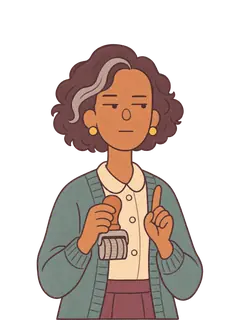
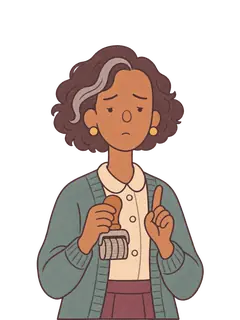
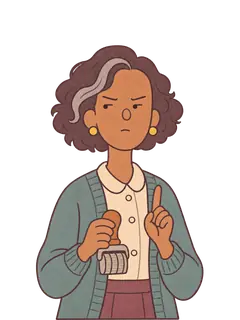


What Amandine says
How they order
Amandine has 8 written orders, heard over the year as the kitchen learns new fillings and techniques; after those, the game makes up more in the same voice. A few of them:
“A long day of overdue notices. Something quiet: lemon and sugar. Triangle. Pale.”
In plain words Lemon and sugar. A triangle. Pale and soft.

“Quietly, please: the Forestière, on buckwheat. Square. Golden.”
In plain words Mushrooms and Emmental on buckwheat. A square envelope. Golden.


“Fiction, shelf F: 'The Mystery of the Red Jar'. Its contents, rolled like a scroll. Crisp.”
In plain words Raspberry jam. Rolled. Crisp. Shelved under F.

“L'Amandine, for Amandine. Don't make a thing of it. A triangle. Golden.”
In plain words Honey and almonds. A triangle. Golden.


In Amandine’s words
When Amandine makes an order up, these are the words for a fold and for how it is cooked:
| They mean | They say |
|---|---|
| Triangle | “a triangle, like a page corner” |
| Square envelope | “square, like a hardback” |
| Rolled | “rolled like a scroll” |
| Pale and soft | “pale as a library card” |
| Golden | “golden as a gilt spine” |
| Crisp | “crisp as a turning page” |
The usual
Once Amandine has a favourite, the order stops being spelled out: the usual is La Forestière, golden. It sounds like this: “Shh. The usual. You know the shelf.” See the usual.
Not sure what they mean? Ask. See orders.
Amandine’s story: Overdue since 1994
“Overdue since 1994” unfolds over four visits, told a little at a time across the counter. Somewhere along it comes a question, and your answer changes one thing you will see and one thing the till feels. Both answers are kind; neither is wrong.
“Our oldest overdue book went out in 1994. A detective novel. Shh. I have a suspect.”
— how it begins
Spoiler The whole of “Overdue since 1994”, its question and its keepsake
- “Our oldest overdue book went out in 1994. A detective novel. Shh. I have a suspect.”
- “It was Fabrice. He's had it thirty years. It made him a writer, he says. He wants it home.”
- “The fine would be enormous. We stopped counting after a decade. What would you do?”
- “He gave a reading at the library. Nine people came. Nobody shushed. Here: our old stamp. (or, after the other answer: “Book back, fine forgiven, and he read to nine people. Nobody shushed. Here: our old stamp.”)”
The question: What about Fabrice's fine?
- Waive it. He brought it back. Amandine: “Waived. Shh. Don't tell the other borrowers. He bowed. Quietly, for once.” (Fabrice, forgiven, tips 10% more.)
- Let him pay it in crêpes. Amandine: “In crêpes! One a week to the front desk until it's paid. Shh. I'm thrilled.” (The library desk orders: one more takeaway slip a week.)
From the library: The library's old rubber stamp, still set to the day the 1994 book came home. It says RETURNED.

The 'returned' stamp The library's rubber stamp, last used on a detective novel thirty years overdue.
Who Amandine knows


Around the street
You will hear from Amandine at The reading night (September).
Presents
From Yann the pedlar’s cart, Amandine would love a pressed-leaf bookmark.
Friendship
Spoiler What Amandine says as you become friends
As you become friends:
- A regular: “I've made you a library card. It's for crêpes. Unofficially.”
- A friend: “Shh. I saved you the window seat in the reading room.”
- A dear friend: “I catalogued your crêpes. They have their own shelf mark now.”
- Family: “If this shop were a book, I'd never let it out on loan.”
When a present arrives:
- “A pressed-leaf bookmark. It's going in my favourite book.”