
Guests
Dominique Pellen
On this page
Their faces
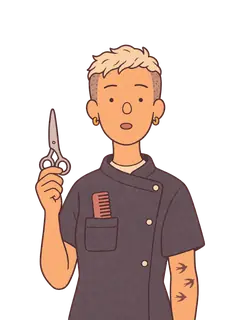
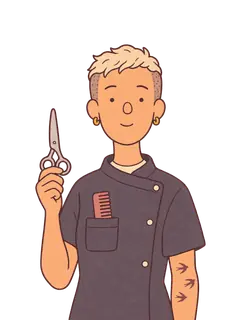
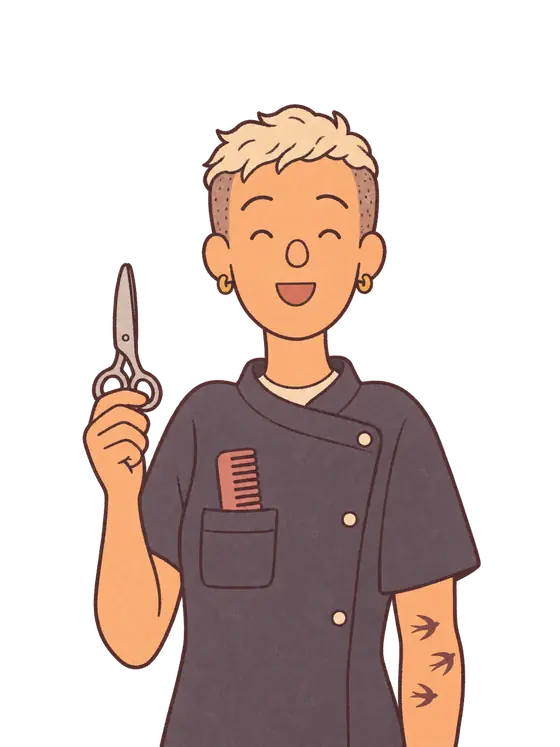
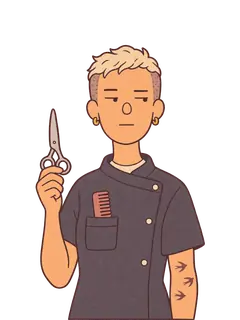
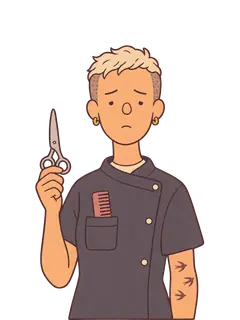
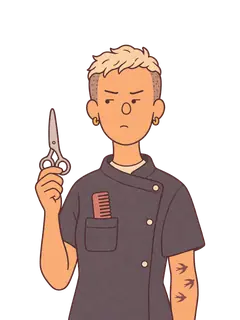


What Dominique Pellen says
How they order
Dominique Pellen has 8 written orders, heard over the year as the kitchen learns new fillings and techniques; after those, the game makes up more in the same voice. A few of them:
“Lemon and sugar, a triangle, both sides even. Crisp. I will check.”
In plain words Lemon and sugar. A triangle. Crisp.

“Short back and sides: butter, lemon and sugar, a triangle. Crisp at the edges.”
In plain words Butter and lemon-sugar. A triangle. Crisp.

“What the bees make, and almonds sliced thin as a close shave. A triangle, sharp. Golden.”
In plain words Honey and almonds. A triangle. Golden.


“Square at the neckline: a ham and cheese galette. Crisp, edges clean.”
In plain words Ham and Emmental on buckwheat. A square envelope. Crisp.


In Dominique Pellen’s words
When Dominique Pellen makes an order up, these are the words for a fold and for how it is cooked:
| They mean | They say |
|---|---|
| Triangle | “a triangle, sharp” |
| Square envelope | “square at the neckline” |
| Rolled | “rolled like a hot towel” |
| Pale and soft | “pale, a light trim of heat” |
| Golden | “golden, even all round” |
| Crisp | “crisp at the edges” |
The usual
Once Dominique Pellen has a favourite, the order stops being spelled out: the usual is La Citronnette, crisp. It sounds like this: “The usual. Same cut as always.” See the usual.
Not sure what they mean? Ask. See orders.
Dominique Pellen’s story: The name on the glass
“The name on the glass” unfolds over four visits, told a little at a time across the counter. Somewhere along it comes a question, and your answer changes one thing you will see and one thing the till feels. Both answers are kind; neither is wrong.
“Two years with the scissors on this street. Half of it still calls my shop 'Riou's'.”
— how it begins
Spoiler The whole of “The name on the glass”, its question and its keepsake
- “Two years with the scissors on this street. Half of it still calls my shop 'Riou's'.”
- “Monsieur Riou cut hair in my shop for forty years. He's booked a trim. With me. Thursday.”
- “He sat in his old chair, shut his eyes, said: 'Go on.' Now the window wants repainting.”
- “Riou came for a second trim. Sat down. Said: 'Shorter than I'd do. Better.' A speech. (or, after the other answer: “Riou came for a second trim. Read both names twice. Said: 'Shorter than I'd do. Better.'”)”
The question: What goes on the barber's window?
- Both names, his and yours. Dominique Pellen: “Riou & Pellen. He'll pretend to mind. He'll walk past twice a day to read it.” (Dominique tips like a full chair: 10% more on her visits.)
- Yours, in gold leaf. Dominique Pellen: “Pellen, in gold. Riou says gold leaf took him eleven years. I'll pay him in trims.” (A smart new window down the street lifts the whole street: a little more renown.)
From the barber's: Monsieur Riou's spare steel comb. 'For the other shop that keeps this street tidy.'

Monsieur Riou's steel comb Forty years on this street, then two more. Fine teeth on one side, wide on the other.
Who Dominique Pellen knows


Presents
From Yann the pedlar’s cart, Dominique Pellen would love a little barber's pole.
Friendship
Spoiler What Dominique Pellen says as you become friends
As you become friends:
- A regular: “I told a client about your edges. He asked who cuts your hair.”
- A friend: “You notice corners. Most people don't. We're a small club.”
- A dear friend: “Armand asked what I think of your crêpes. I never discuss friends.”
- Family: “If I ever open a second chair, it's yours. You've the hands for it.”
When a present arrives:
- “A pole for my mantelpiece! It doesn't turn. Nor do I, Sundays.”