
Guests
Armand
On this page
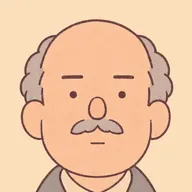
Their faces








What Armand says
How they order
Armand has 17 written orders, heard over the year as the kitchen learns new fillings and techniques; after those, the game makes up more in the same voice. A few of them:
“After the barber: a galette of mushrooms and cheese, square. Crisp. Note the moustache.”
In plain words Mushrooms and Emmental on buckwheat. A square envelope. Crisp. What barber?


“A Parisienne galette, but rolled, as no Parisian would dare. Golden. I am testing nerves.”
In plain words Ham and Emmental on buckwheat. Rolled, not square. Golden. Yours held.

“Salted caramel on butter, rolled tight as a diploma. Golden. Caramel forgives nothing.”
In plain words Salted caramel and butter. Rolled. Golden. Neither do I.


“La Ruche, but in four folds, square. Pale. The bees have done their part. Now you.”
In plain words Honey and lemon-sugar. A square envelope, not rolled. Pale and soft.


The usual
Once Armand has a favourite, the order stops being spelled out: the usual is La Toute Simple, golden. It sounds like this: “The usual. The benchmark. You know which.” See the usual.
Not sure what they mean? Ask. See orders.
Crêpes they love


Armand’s face is on those pages of the notebook.
Armand’s story: The cat in the window
A second story, “The cat in the window”, begins after the first ten days and unfolds over five visits, told a little at a time across the counter. Somewhere along it comes a question, and your answer changes one thing you will see and one thing the till feels. Both answers are kind; neither is wrong.
“A grey cat has taken to sleeping in my window. On the display. I have not fed it.”
— how it begins
Spoiler The whole of “The cat in the window”, its question and its keepsake
- “A grey cat has taken to sleeping in my window. On the display. I have not fed it.”
- “A cushion has appeared in my window. For the display. The cat approves of the display.”
- “The display card wants the cat's name. I cannot be seen to choose one. You choose.”
- “The cat crosses the street each afternoon to sleep on your sill. On loan. Strictly. (or, after the other answer: “Rozell crosses to your sill each afternoon. On loan, strictly. I have written the terms.”)”
- “I was in Quimper on Sunday. The cat kept your sill. Eleven rules, all kept. Here. (or, after the other answer: “Quimper, Sunday. Rozell kept your sill and all eleven rules. Here. Rule twelve: use it.”)”
The question: What should Armand call the cat?
- Rozell, after the spreader. Armand: “Rozell. A spreader's name, for a cat who spreads herself over everything. Apt.” (On sunny days the cat comes to sit on your sill more often.)
- Monsieur. He has the whiskers. Armand: “Monsieur. Yes. He has the bearing. I shall have a bowl engraved. Plain capitals.” (Armand tips 10% more on his visits: 'on Monsieur's account'.)
Rule twelve: A boxwood butter stamp carved as a sleeping cat. The card says: 'Rule twelve: use it.'

Armand's cat butter stamp A boxwood butter stamp: a sleeping cat, tail round its nose. It leaves a cat in every pat.
In the street’s second year
The story does not stop at the end of the first year: Armand has a postscript in the second.
Spoiler Armand’s postscript
- “The cat keeps two addresses now: your sill in the mornings, my window after lunch.”
- “Capucine has reviewed the cat. Ten out of ten. My own review is still 'pending'.”
- “I have bought a second cushion. For your sill. The cat insisted. I merely paid.”
Who Armand knows











Around the street
You will hear from Armand at Le Marché aux Fleurs (April), Les Journées du Patrimoine (September), La Fête des Rois (January), Mardi Gras (February), Poisson d’Avril (April), The Lantern’s Birthday (April), The photographer (April), The candle evening (November), Armand's truce (February), The bandstand on the square, Lison's pitch on the square and Lanterns the length of the street.
Armand also has a word to say in 13 of the street’s little moments.
Spoiler The chapters Armand has a part in
Armand turns up in The grey card, Lison's cart, When the season ends, The cold oven, The captain's question and The Rois bean.
Presents
From Yann the pedlar’s cart, Armand would love the good moustache wax and a tin of Guérande salt.
Friendship
Spoiler What Armand says as you become friends
As you become friends:
- A regular: “I was passing. I pass often. It is a public street.”
- A friend: “I have a usual stool now. Do not make a thing of it.”
- A dear friend: “Do not smile like that. I come for the butter. Only the butter.”
- Family: “If anyone asks: passable. Between us, it is rather more.”
When a present arrives:
- “The wax was correct. One does not say thank you. One nods.”
- “Guérande salt. You have taste. I deny saying so.”