
Guests
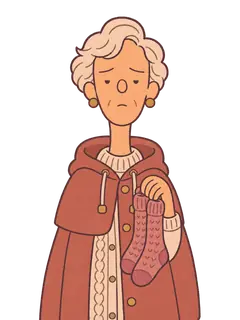
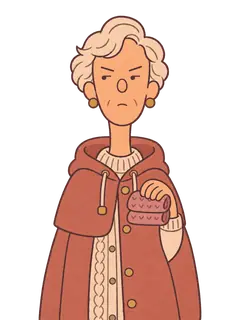
Madame Greet
On this page
Their faces
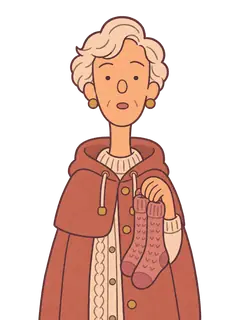
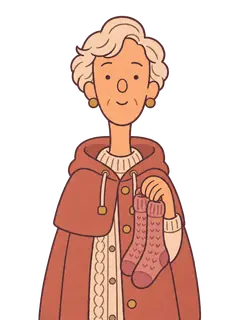
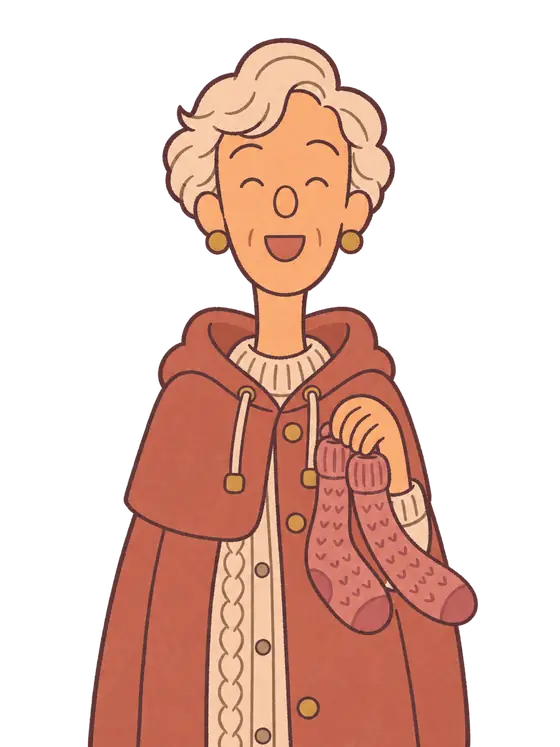
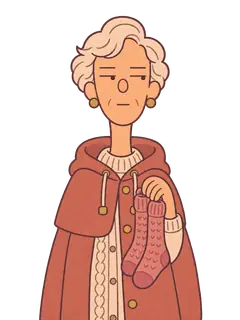


What Madame Greet says
How they order
Madame Greet has 8 written orders, heard over the year as the kitchen learns new fillings and techniques; after those, the game makes up more in the same voice. A few of them:
“Speculoos and banana, rolled. Golden. Is it his favourite? It is mine.”
In plain words Speculoos and banana. Rolled. Golden.


“For Wim, to take: banana, rolled like a ball of wool. Golden. He eats walking.”
In plain words Banana. Rolled. Golden. To take away.
“Red jam under something white and soft as new wool. Turned like a heel. Pale.”
In plain words Raspberry jam and whipped cream. A triangle. Pale and soft.


“For me: the spiced biscuit spread, whipped cream on top. Turned like a heel. Pale.”
In plain words Speculoos and whipped cream. A triangle. Pale and soft.
In Madame Greet’s words
When Madame Greet makes an order up, these are the words for a fold and for how it is cooked:
| They mean | They say |
|---|---|
| Triangle | “turned like a heel” |
| Square envelope | “folded like a pair of socks” |
| Rolled | “rolled like a ball of wool” |
| Pale and soft | “pale as undyed wool” |
| Golden | “golden, like mustard yarn” |
| Crisp | “crisp, a new cuff” |
The usual
Once Madame Greet has a favourite, the order stops being spelled out: the usual is La Spéculette, pale and soft. It sounds like this: “My usual, and nothing for Wim today. He ate.” See the usual.
Not sure what they mean? Ask. See orders.
Madame Greet’s story: One thing he can cook
“One thing he can cook” unfolds over four visits, told a little at a time across the counter. Somewhere along it comes a question, and your answer changes one thing you will see and one thing the till feels. Both answers are kind; neither is wrong.
“He eats here every day? Every day. He cannot boil an egg. I can fix one of those.”
— how it begins
Spoiler The whole of “One thing he can cook”, its question and its keepsake
- “He eats here every day? Every day. He cannot boil an egg. I can fix one of those.”
- “I asked him to cook me supper. He found a page in his book: 'fermé'. Closed.”
- “Will you show him one crêpe before I go home? One. He can learn one.”
- “He made it for me on his little stove. Was it good? It was good. Here, for your feet. (or, after the other answer: “He made the banana one, rolled, for me. Was it good? It was good. Here, for your feet.”)”
The question: What should Wim learn to make?
- Banana, rolled. His favourite. Madame Greet: “His favourite, so he will practise. Clever. Good.” (Wim tips 10% more: he knows now how much work goes into a crêpe.)
- Lemon and sugar. Hard to get wrong. Madame Greet: “Simple. Is that wise? It is wise. He drops spoons.” (Wim waits 10% longer: he knows now that lemon can't be rushed.)
Hand-knitted: A pair of hand-knitted socks in terracotta wool, 'for standing at the griddle'.

Greet's hand-knitted socks Terracotta wool, ribbed at the cuff. 'In pairs, like everything.'
Who Madame Greet knows


Around the street
Madame Greet also has a word to say in 1 of the street’s little moments.
Presents
From Yann the pedlar’s cart, Madame Greet would love a basket of wool.
Friendship
Spoiler What Madame Greet says as you become friends
As you become friends:
- A regular: “I am knitting you something. What? You will see. Socks.”
- A friend: “Wim says you are his first friend here. First? First.”
- A dear friend: “I tell his aunts about you. All seven aunts. They want the recipe.”
- Family: “If he stays another year, I know where he eats. Good.”
When a present arrives:
- “Wool! Grey and red. Is it for socks? It is for socks.”