
Guests
Mamie Hortense
On this page
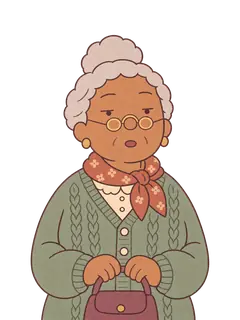
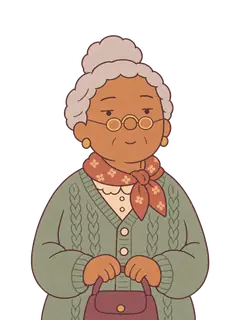
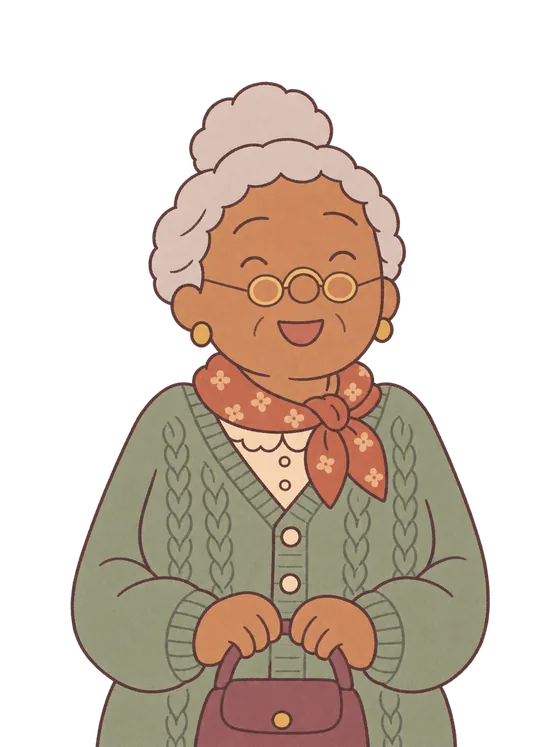
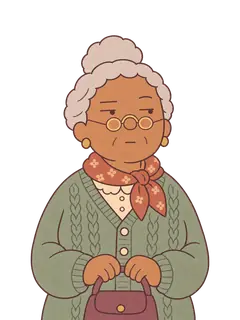
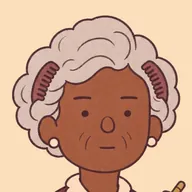
Their faces
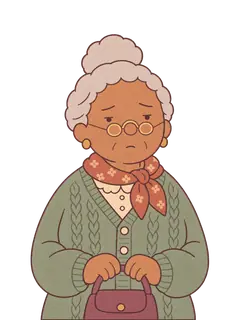
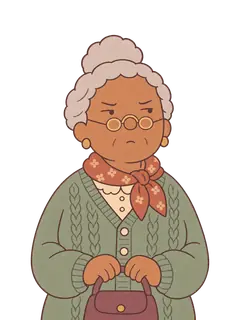


What Mamie Hortense says
How they order
Mamie Hortense has 19 written orders, heard over the year as the kitchen learns new fillings and techniques; after those, the game makes up more in the same voice. A few of them:
“My chestnut cream under cream beaten stiff. A hankie corner. Pale, no colour at all.”
In plain words Chestnut cream and whipped cream. A triangle. Pale and soft. The tin was mine.


“My apples, stewed, with burnt sugar and salt butter. Rolled this time. Golden.”
In plain words Apple compote and salted caramel. Rolled, not a triangle. Golden.


“A pear and that brown hazelnut spread. Hankie corner. Golden. Marcel's Sunday treat.”
In plain words Pear and chocolate-hazelnut. A triangle. Golden. He had it after the market.


“A little one: what the bees left us, in a hankie corner. Pale. A taste only, dear.”
In plain words A petite crêpe with honey. A triangle. Pale and soft.

The usual
Once Mamie Hortense has a favourite, the order stops being spelled out: the usual is La Normande, pale and soft. It sounds like this: “The usual, child. My apples. You know.” See the usual.
Not sure what they mean? Ask. See orders.
Crêpes they love



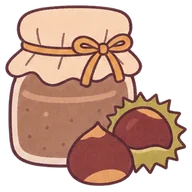
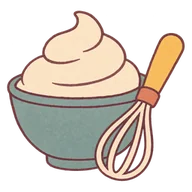



Mamie Hortense’s face is on those pages of the notebook.
Mamie Hortense’s story: The Comice
A second story, “The Comice”, begins after the first ten days and unfolds over five visits, told a little at a time across the counter. Somewhere along it comes a question, and your answer changes one thing you will see and one thing the till feels. Both answers are kind; neither is wrong.
“The autumn Comice, the town show, has a jam class. I've entered. Kindness has limits.”
— how it begins
Spoiler The whole of “The Comice”, its question and its keepsake
- “The autumn Comice, the town show, has a jam class. I've entered. Kindness has limits.”
- “Paulette's entered too. Raspberry, as ever. Somebody must beat her, and I'm somebody.” Paulette: “She's told you, then. I've entered. She's tried to beat me since 1952. We shall see.”
- “Five jars, my apples five ways. One goes on the judging table. Taste them all. Gently.”
- “Jar one is my mother's. Jar four is new. Which goes to the Comice? Be honest. Or kind.”
- “Second prize! Paulette third. Seventy years, and I've beaten her once. Here, child. Yours. (or, after the other answer: “Second prize, for jar four. Paulette third. The first time in seventy years. Here. Yours.”)”
The question: Which jar do you tell her to enter?
- Jar four. It's better. Mamie Hortense: “Better than my mother's? Well. It is, isn't it. I'll change the lot. Grumbling.” (Apple compote crêpes sell for 10% more: her new jars stock your shelf.)
- Jar one. Your mother's. Mamie Hortense: “Mother's. I knew it. I only wanted to hear somebody say it out loud. Thank you, child.” (Hortense leaves two sacks of orchard compost at your back gate.)
Second prize, preserves: Hortense's blue rosette from the Comice. Pinned to a tea towel, so it won't crease.

Hortense's Comice rosette Blue silk: 'Second prize, preserves'. Pinned to a tea towel so it will never crease.
In the street’s second year
The story does not stop at the end of the first year: Mamie Hortense has a postscript in the second.
Spoiler Mamie Hortense’s postscript
- “Jar four sold out at the market, child. Forty jars. I have a waiting list. Me!”
- “Monsieur Hippolyte asked me to judge the children's jams. Every jar got a kind word.”
- “Paulette and I are practising for the pairs. She stirs, I taste, we argue. Lovely.”
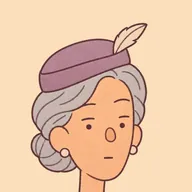
Who Mamie Hortense knows







Around the street
You will hear from Mamie Hortense at Le Marché aux Fleurs (April), La Saint-Martin (November), Les Journées du Patrimoine (September), La Veillée des Citrouilles (October), Poisson d’Avril (April), The Lantern’s Birthday (April), The photographer (April), Vide-grenier (May), The wedding order (June), Jam week (October), The candle evening (November), The longest night (December), Yvonne's sales (January), First snow (January), Rain week (February), Armand's truce (February), The bandstand on the square, The street's bread oven, The mended fountain, Lison's pitch on the square, Young plane trees and Lanterns the length of the street.
Mamie Hortense also has a word to say in 32 of the street’s little moments.
Spoiler The chapters Mamie Hortense has a part in
Mamie Hortense turns up in The grey card, Lison's cart, When the season ends, The cold oven, The captain's question, The first concert, Théo's cargo bike, The lost recipe card and The Rois bean.
Presents
From Yann the pedlar’s cart, Mamie Hortense would love a ball of heather-grey wool and a jar-lid opener.
Friendship
Spoiler What Mamie Hortense says as you become friends
As you become friends:
- A regular: “You are filling out nicely, my rabbit. So is your till.”
- A friend: “I knitted your lantern a little scarf. Do not argue, my rabbit.”
- A dear friend: “I have told my grandchildren you are their cousin now.”
- Family: “My door is never locked for you. Neither is my jam cupboard.”
When a present arrives:
- “That wool is a scarf now. It is yours. Do not argue.”
- “I opened every jar in the house. Out of spite. Thank you.”
Back in the notebook: La Tatin, lent 'for a week'. In the margin, in another hand: MORE BUTTER.