
Guests
Hector
On this page
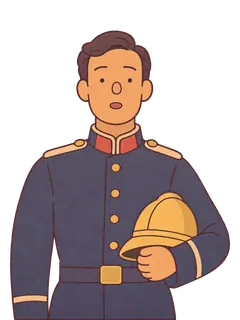
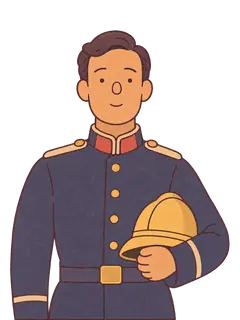
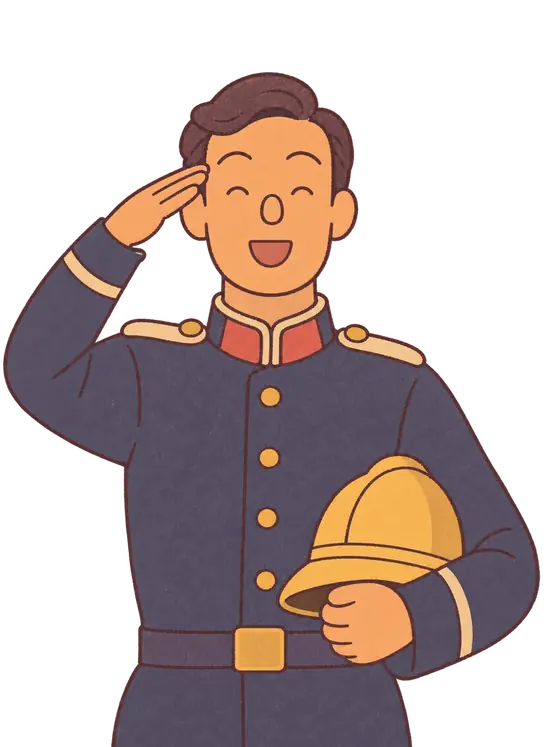
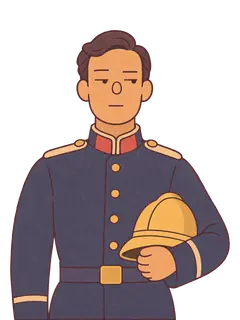
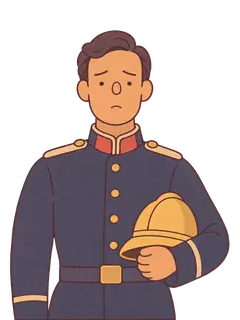
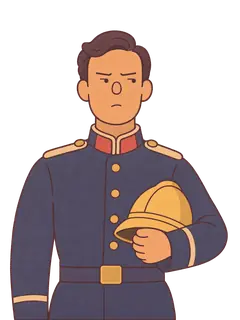
Their faces


What Hector says
How they order
Hector has 8 written orders, heard over the year as the kitchen learns new fillings and techniques; after those, the game makes up more in the same voice. A few of them:
“To take to the station: apple compote and butter, rolled. Pale, nice and safe.”
In plain words Apple compote and butter. Rolled. Pale and soft.


“For the ball committee, which is me: strawberries and cream, a triangle. Golden.”
In plain words Strawberries and whipped cream. A triangle. Golden.


“Honey, and the curved fruit that comes in bunches. A triangle. Golden, not a degree more.”
In plain words Honey and banana. A triangle. Golden.


“Spinach, cheese and egg galette, square as a drill blanket. Crisp, under supervision.”
In plain words Spinach, Emmental and egg on buckwheat. A square envelope. Crisp.


In Hector’s words
When Hector makes an order up, these are the words for a fold and for how it is cooked:
| They mean | They say |
|---|---|
| Triangle | “a flag-folded triangle” |
| Square envelope | “square as a drill blanket” |
| Rolled | “rolled like a hose” |
| Pale and soft | “pale, nice and safe” |
| Golden | “golden, not a degree more” |
| Crisp | “crisp, under supervision” |
The usual
Once Hector has a favourite, the order stops being spelled out: the usual is La Rouge-Gorge, golden. It sounds like this: “The usual, Madame. As per regulations.” See the usual.
Not sure what they mean? Ask. See orders.
Hector’s story: Next year's ball
“Next year's ball” unfolds over four visits, told a little at a time across the counter. Somewhere along it comes a question, and your answer changes one thing you will see and one thing the till feels. Both answers are kind; neither is wrong.
“The ball was a squeeze: eighty dancers in a station built for two engines. We moved them.”
— how it begins
Spoiler The whole of “Next year's ball”, its question and its keepsake
- “The ball was a squeeze: eighty dancers in a station built for two engines. We moved them.”
- “Solenn's offered us the square next July, by the bandstand. Patrice's band till eleven.”
- “Brass bands stop at eleven; the lips give out. After eleven we need someone softer.”
- “Bandstand next July. The station has a waltz class now. Twelve signed up. Naturally. (or, after the other answer: “Zélie played the station a waltz to seal it. The engine bell joined in.”)”
The question: Who should play after eleven?
- Zélie, from the square. Hector: “Zélie! Plays for coins; will play for crêpes. I'll ask her in full uniform.” (On Quatorze Juillet the dancers come for crêpes: one more guest that day.)
- A dance-hall accordion player. Hector: “An accordion at midnight. The older firemen will weep, gently, into their helmets.” (On Quatorze Juillet the old waltzers tip 10% more.)
From the station: The first dance card for next July's ball. 'For your wall, Madame. Every dance listed; none late.'

A firemen's ball dance card Printed for next July's ball at the bandstand, with a tiny red pencil on a string.
Who Hector knows


Around the street
You will hear from Hector at Le Quatorze Juillet (July).
Presents
From Yann the pedlar’s cart, Hector would love a brass-polishing cloth.
Friendship
Spoiler What Hector says as you become friends
As you become friends:
- A regular: “La Lanterne is on my round of friendly inspections. Top marks.”
- A friend: “The station asked where I get my crêpes. I said: classified.”
- A dear friend: “You'd make a fine officer. Calm at a hot griddle. Warm. Warm griddle.”
- Family: “Your counter's on the station map now. Marked: 'All clear. Always.'”
When a present arrives:
- “A polishing cloth! The helmet will be unbearable now.”