
Guests
Ulysse
On this page
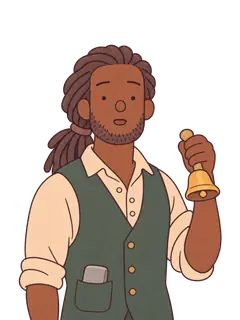
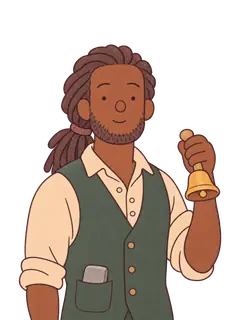
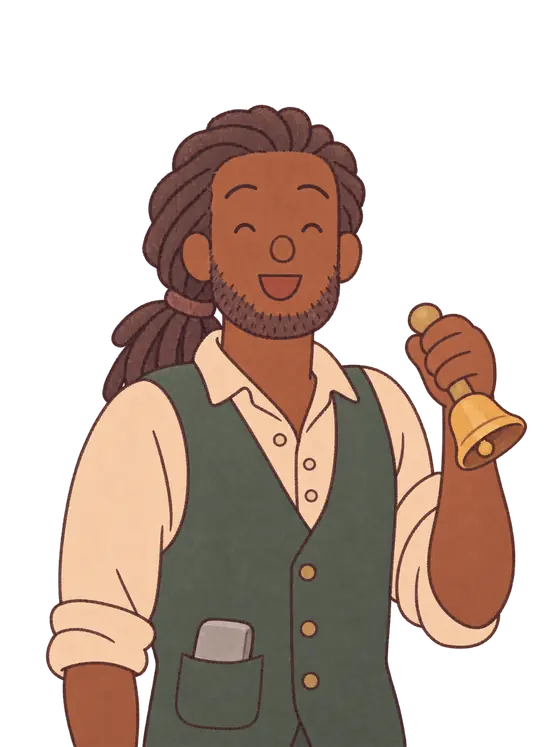
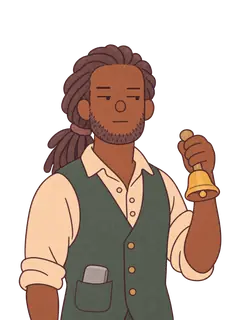
Their faces
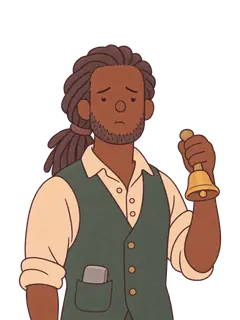
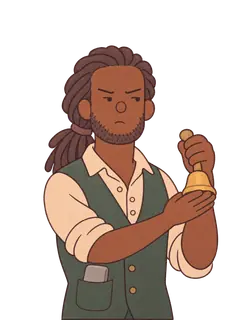


What Ulysse says
How they order
Ulysse has 8 written orders, heard over the year as the kitchen learns new fillings and techniques; after those, the game makes up more in the same voice. A few of them:
“Sharp edges, soft middle: banana, three sharp corners. Crisp at the edges.”
In plain words Banana. A triangle. Crisp.

“Lemon and sugar on butter, rolled, no edges. Pale, a soft middle. Ding.”
In plain words Lemon and sugar with butter. Rolled. Pale and soft.


“A galette with four clean edges: ham and cheese. Crisp, a keen edge.”
In plain words Ham and Emmental on buckwheat. A square envelope. Crisp.


“Your aunt paid my father in these: apple compote and caramel. Rolled. Golden.”
In plain words Apple compote and salted caramel. Rolled. Golden.


In Ulysse’s words
When Ulysse makes an order up, these are the words for a fold and for how it is cooked:
| They mean | They say |
|---|---|
| Triangle | “a triangle, sharp corners” |
| Square envelope | “four clean edges” |
| Rolled | “rolled, no edges” |
| Pale and soft | “pale, a soft middle” |
| Golden | “golden as my bell” |
| Crisp | “crisp, a keen edge” |
Not sure what they mean? Ask. See orders.
Ulysse’s story: The old knife
“The old knife” unfolds over four visits, told a little at a time across the counter. Somewhere along it comes a question, and your answer changes one thing you will see and one thing the till feels. Both answers are kind; neither is wrong.
“Ding. Your spatula's edge is dull, Madame. I can hear it under the crêpe. Let me see it.”
— how it begins
Spoiler The whole of “The old knife”, its question and its keepsake
- “Ding. Your spatula's edge is dull, Madame. I can hear it under the crêpe. Let me see it.”
- “My father ground your aunt's knives every spring. Her old crêpe knife is in your drawer.”
- “I've ground her knife. It's as good as the day she bought it. Now: what is it for?”
- “I'm leaving you my old whetstone. Two strokes each morning. Your aunt did the same. (or, after the other answer: “Her knife looks well on your wall. Here: my old whetstone, so it stays that way.”)”
The question: What should Maëlle's knife do?
- Hang it on the wall. Ulysse: “On the wall, by the lantern. Where everyone can see her edge.” (A piece of Maëlle's kitchen on the wall: ambience +1.)
- Use it every day. Ulysse: “Use it! A knife on a wall is a sad knife. She'd have said the same.” (A keen old knife under the crêpe: perfect flips pay a little more.)
From the grinder's cart: Ulysse's old whetstone, worn hollow in the middle by his strokes and his father's.

The grinder's whetstone Worn hollow by two grinders and one crêpière's knife. Two strokes a morning.
Who Ulysse knows


Presents
From Yann the pedlar’s cart, Ulysse would love a tin of honing oil.
Friendship
Spoiler What Ulysse says as you become friends
As you become friends:
- A regular: “Your spatula's on my list now. First stop, every round.”
- A friend: “I told my father about you. He says your aunt paid in crêpes too.”
- A dear friend: “A free sharpening for you, for good. Don't tell Armand.”
- Family: “This is the one stop where I don't open my case. I just sit.”
When a present arrives:
- “Honing oil! The wheel will purr all season. Merci.”