
Guests
Madame Esmé Ruaud
On this page
Their faces
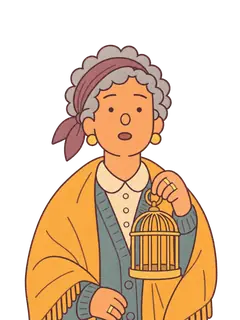
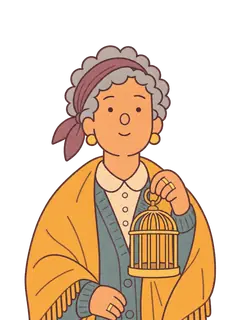
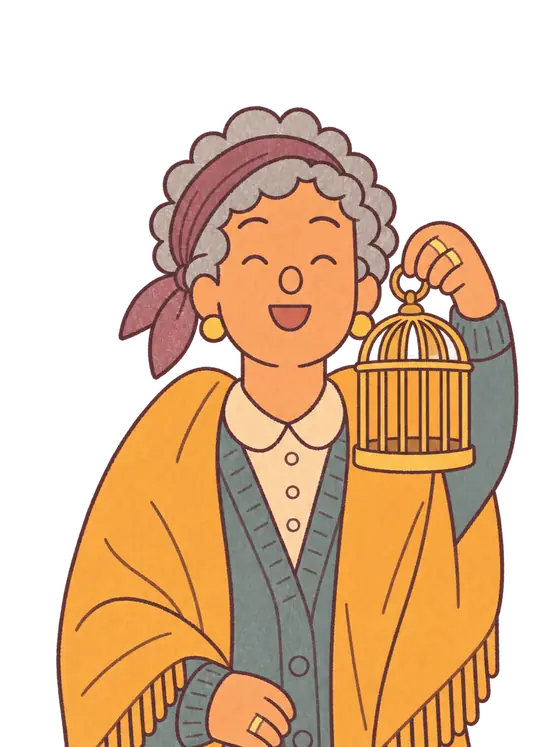
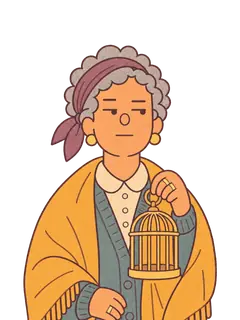
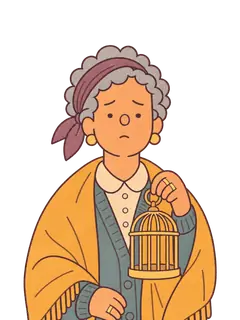
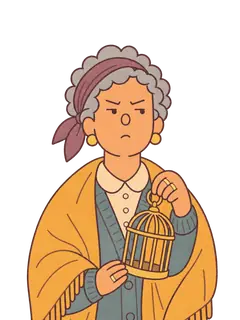


What Madame Esmé Ruaud says
How they order
Madame Esmé Ruaud has 8 written orders, heard over the year as the kitchen learns new fillings and techniques; after those, the game makes up more in the same voice. A few of them:
“Strawberries and jam, a triangle. Golden. Now that one has a story, my treasure.”
In plain words Raspberry jam and strawberries. A triangle. Golden.


“The sour yellow fruit, sugared: the oldest page in any notebook. A triangle. Pale.”
In plain words Lemon and sugar. A triangle. Pale and soft.

“Chestnut cream with whipped cream. A triangle. Pale. A recipe with provenance, that.”
In plain words Chestnut cream and whipped cream. A triangle. Pale and soft.


“Butter, a triangle. Golden. The plainest lots always fetch the best prices.”
In plain words Butter. A triangle. Golden.

In Madame Esmé Ruaud’s words
When Madame Esmé Ruaud makes an order up, these are the words for a fold and for how it is cooked:
| They mean | They say |
|---|---|
| Triangle | “a classic triangle” |
| Square envelope | “a jewel-box square” |
| Rolled | “rolled like a tapestry” |
| Pale and soft | “pale, like old lace” |
| Golden | “golden, gilt-edged” |
| Crisp | “crisp, like parchment” |
The usual
Once Madame Esmé Ruaud has a favourite, the order stops being spelled out: the usual is La Coquette, crisp. It sounds like this: “The usual, my treasure. My final offer.” See the usual.
Not sure what they mean? Ask. See orders.
Madame Esmé Ruaud’s story: The empty birdcage
“The empty birdcage” unfolds over four visits, told a little at a time across the counter. Somewhere along it comes a question, and your answer changes one thing you will see and one thing the till feels. Both answers are kind; neither is wrong.
“Everyone asks the price of the birdcage. It isn't for sale. It's the one thing I keep.”
— how it begins
Spoiler The whole of “The empty birdcage”, its question and its keepsake
- “Everyone asks the price of the birdcage. It isn't for sale. It's the one thing I keep.”
- “It was my mother's. She hung it on her balcony, door open, for any bird that liked.”
- “A girl wanted it for her pencils. I said no. Perhaps it ought to do something, though.”
- “A sparrow sat in the cage this morning, door open. Then it flew. Here: the little key. (or, after the other answer: “A sparrow looked in at your fern this morning. Here: the cage's key. It was never locked.”)”
The question: What should the birdcage do?
- Hang in my window, with a fern. Madame Esmé Ruaud: “A fern in my mother's cage, in your window. She'd have said yes before you asked.” (A brass birdcage with a fern in the window: ambience +1.)
- Open on your balcony, like hers. Madame Esmé Ruaud: “Door open, on the balcony, the way she did it. I'll tell you who comes.” (Esmé overpays more than ever: 10% more on her visits.)
From Esmé's birdcage: A tiny brass key on a plum ribbon: 'it never locked anything, my treasure'.

The birdcage key Brass, no longer than a thumbnail. The cage it belongs to has never once been shut.
Who Madame Esmé Ruaud knows


Around the street
You will hear from Madame Esmé Ruaud at Vide-grenier (May).
Presents
From Yann the pedlar’s cart, Madame Esmé Ruaud would love a jeweller's loupe.
Friendship
Spoiler What Madame Esmé Ruaud says as you become friends
As you become friends:
- A regular: “You're on my good-customers list. It's short and very old.”
- A friend: “If you ever want a lamp, a lid or a story, come to my stall.”
- A dear friend: “I told a buyer your crêpes have provenance. He came here. Did he?”
- Family: “Of everything on this street, you're the piece I'd never sell.”
When a present arrives:
- “A loupe! Now I can see exactly how lovely everything is.”